


ROCCA CASTRIGNANO
‘We have been producing Parmigiano Reggiano since 1910’.
Aged
24, 36, 48 and 60 months
It all began in Valle di Castrignano, an ancient borgo in the Parma hills of Langhirano, consisting of numerous buildings dating back to medieval times. In 1910, at the Rocca di Valle di Castrignano, Parmigiano Reggiano was still being cooked by fire. There was a small casello, of typical architecture, for two cauldrons: two cheeses, at that time, came out of the milk every morning and who knows how long this ritual had been going on unchanged between the white walls of the village's medieval towers. The Campelli family, owners of the complex since the early 20th century, as well as of four other estates, three in the Parma plain, Piccionaia, Serafina and Riva Bianca, and one in the hills, il Fornello, was made up of many siblings: Gianni, Clelia, Domenico, Mario and many other people then populated the Rocca, all engaged in farming. The towers and the old architecture, built seven centuries ago with white stones quarried with difficulty from the cultivated land, were then not just the memory of a mysterious past, made up of wars, fables and legends, but a place of production in harmony with the surrounding environment, made up of woods, oaks and extensive cultivation. This is how life flowed in the Rocca, with its rhythms unchanged for centuries. The people, the granaries, the stables, the houses, the woods and the fields of the Campelli family lived together, united by a single purpose: to bring out, every morning, the two wheels of Parmigiano Reggiano cheese from the small casello. Today, the Campelli farm has around three hundred head of cattle, of which 140 are lactating. It owns seventy hectares of land, cultivated for organic fodder, respecting crop rotation, thus alternating alfalfa with cereals. For the past three years, the company has been committed to safeguarding the two Italian cattle breeds closest to extinction, typical of the Parma area and already bred by our farm until the 1950s: the Bardigiana cow and the Langhiranese or Grigia dell'Appennino cow. Producing and selling Parmigiano Reggiano. Every day, for over a hundred years.
Buy our Parmigiano-Reggiano
"Produced in the heart of the Castrignano Valley in Langhirano (Parma), nestled between the Bosso and Sporno Mountains and the UNESCO MAB Reserve of the Tuscan-Emilian Apennines, our Parmigiano Reggiano is made from mountain milk sourced from our own supply chain. From artisanal curd to long aging periods of up to 60 months, we bring the authentic Parmesan cheese-making tradition to your table."


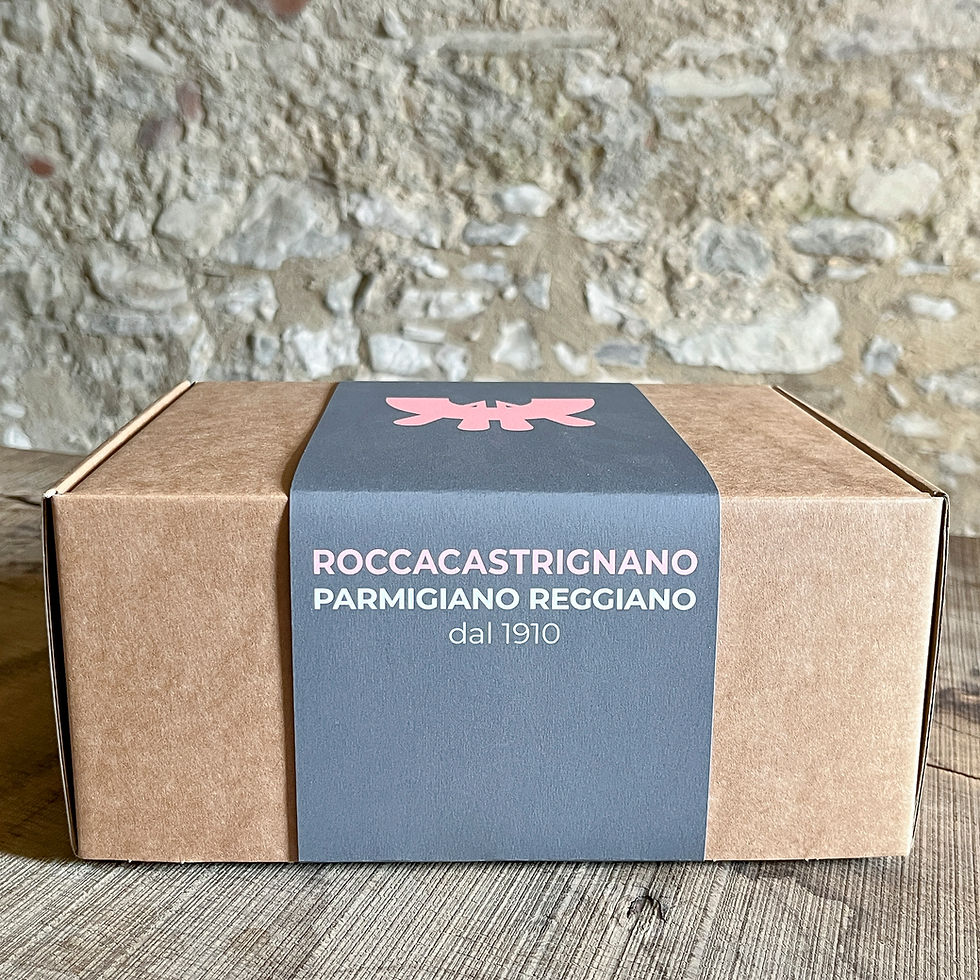


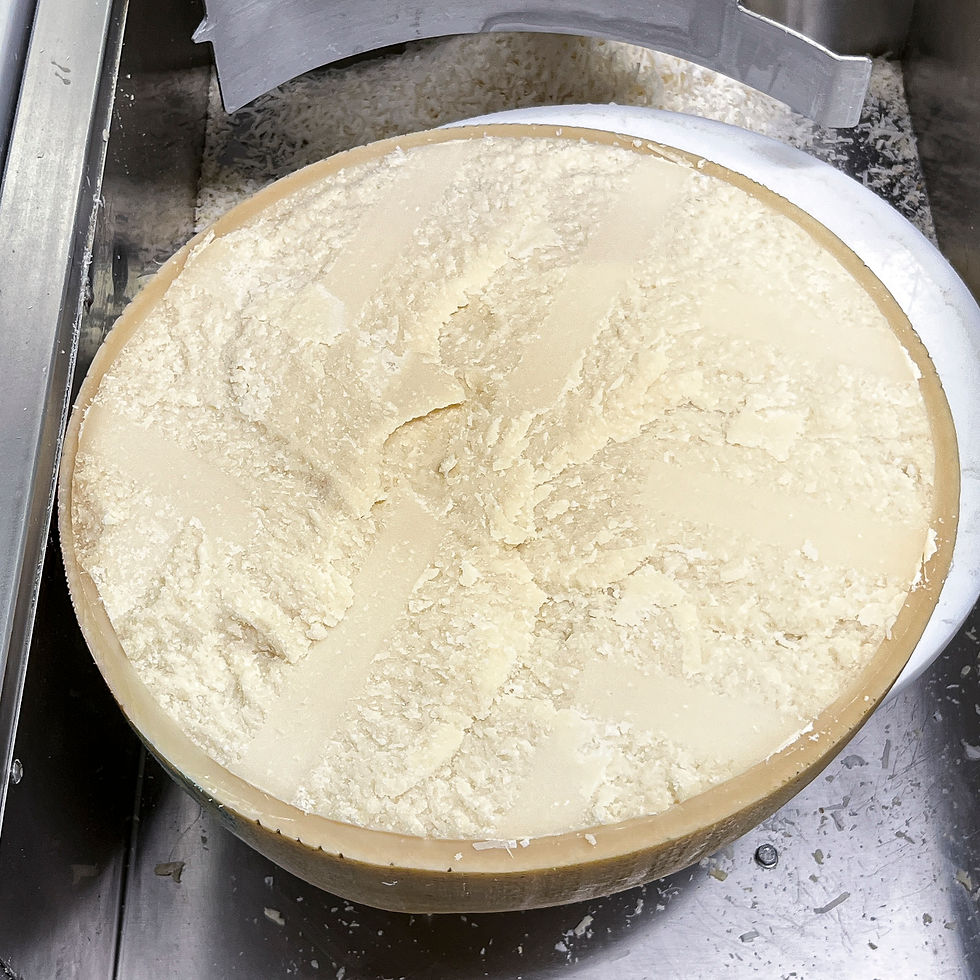


Pair our Parmigiano-Reggiano


DELICATE
Parmigiano Reggiano
ROCCACASTRIGNANO
12 months
The 12-month-aged Parmigiano Reggiano has a fresh, milky, and harmonious flavor on the palate, with distinct notes of mountain grass and melted butter. The cheese has a soft, elastic, and uniformly smooth texture.

What to serve it with?
It’s ideal cut into cubes as an appetizer, paired with fresh fruit (such as pears and apples), raw vegetables with a dipping sauce, or accompanied by a glass of light, sparkling white wine.

HARMONIC
Parmigiano Reggiano
ROCCACASTRIGNANO
24 months
24-month Parmigiano Reggiano has a good balance of sweet and salty flavours on the palate, and hints of milk and yoghurt are accompanied by notes of melted butter and fresh fruit such as banana and pineapple. The cheese is crumbly and grainy.
What to pair it with?
Our 24-month Parmigiano Reggiano lends itself perfectly to many recipes: add it, for example, grated or in petals to your pasta dishes, soups and velvety soups, or pair it with a medium-bodied wine.

AROMATIC
Parmigiano Reggiano
ROCCACASTRIGNANO
36 months
The 36-month-aged Parmigiano Reggiano has hints of dried fruit, an aroma of meat broth, and spices such as nutmeg. The shavings are soluble, very crumbly, and dry.

What to pair it with?
Choose our 36-month Parmigiano Reggiano as an ingredient in stuffed and baked pasta recipes, or try it at the end of a meal with fruit and honey.

INTENSE
Parmigiano Reggiano
ROCCACASTRIGNANO
48 months
The 48-month-aged Parmigiano Reggiano has a straw-yellow to amber color and an intense, toasty aroma with typical notes of leather, dried mushrooms, and smoke.

What to pair it with?
If you love wine, you could for example choose an excellent 48-month Parmigiano Reggiano and honey to accompany the more structured and meditative ones.

SHARP
Parmigiano Reggiano
ROCCACASTRIGNANO
60 months
Parmigiano Reggiano aged for over 60 months makes for an exclusive gift and a delightful accompaniment to honey, sweet jams, or meditation wines.

What to pair it with?
Our 60-month Parmigiano Reggiano is a true delicacy and is excellent to enjoy at the end of a meal with honey, jams, sweets or a meditation wine.
FREQUENTLY ASKED QUESTIONS
Where is Roccacastrignano Parmigiano Reggiano produced? Our farm is located in Valle di Castrignano, in the municipality of Langhirano (Parma), within the protected area of the Bosso and Sporno Mountains and the UNESCO MAB Reserve of the Tuscan-Emilian Apennines. Which breeds are used to produce Parmigiano Reggiano today? Today, Parmigiano Reggiano is produced primarily from the Friesian breed, but tradition and production regulations also allow for the use of historic and prized breeds such as the Bruna, Reggiana, and Modenese. Roccacastrignano is the only producer to make Parmigiano Reggiano using milk from the Appennine Gray breed. What is Parmigiano Reggiano made with milk from the Grigia dell’Appennino breed? It is a premium, niche cheese made from the milk of the rare, native Grigia dell’Appennino cattle breed (historically known as Garfagnina, Langhiranese, or Modenese di Monte). Its milk is currently blended with that from Frsiona, as the project—which began in 2020—is still in progress. Thanks to a natural diet and mountain hay, this milk imparts complex aromas to the Parmigiano Reggiano, a distinct aptitude for very long aging periods, and significant value in terms of preserving biodiversity. What ages of Parmigiano Reggiano are available for purchase online? In our online store, we offer various ages of Parmigiano Reggiano: 12 months (Vacche Grigie Line), 24 months (Armonico), 36 months (Aromatico), 48 months (Intenso), and the special 60-month reserve (Deciso). All cuts are vacuum-sealed and available in 1-kg wedges, eighths of a wheel, half-wheels, and whole wheels. Is Roccacastrignano Parmigiano Reggiano lactose-free? Yes, absolutely. Roccacastrignano Parmigiano Reggiano is naturally lactose-free and can be safely consumed by those with lactose intolerance. Although we use as much as 16 liters of fresh milk to produce just one kilogram of cheese, the lactose disappears completely within the first 24–48 hours of the wheel’s life thanks to the natural separation of the whey and the fermentation by lactic acid bacteria. This age-old process, combined with aging, eliminates all sugars without the need for any chemical treatment or added enzymes, as also certified by the Ministry of Health. Can I purchase whole wheels or corporate gift sets? Yes, you can purchase whole wheels of Parmigiano Reggiano (aged 24, 36, 48, or 60 months), gift sets with assorted cheese slices, and artisanal accessories such as our oak cutting boards.
FREQUENTLY ASKED QUESTIONS about product storage
1. How can I check if the vacuum seal is intact upon delivery? When the package arrives, take a corner of the bag and pull gently: the bag should offer resistance and be tightly sealed against the surface of the cheese. If the bag feels flimsy or is full of air, it means the vacuum seal has broken during shipping. 2. At what temperature should I store Parmigiano Reggiano? Whether the piece is still vacuum-sealed or has already been opened, it should always be stored in the refrigerator at a temperature between 6° and 8° C. 3. How should I store Parmigiano Reggiano after opening the package? Once the vacuum-sealed package is opened, the best way to store it is to leave it inside its original bag, simply folding the opening closed by hand. 4. Can I close the opened bag with a rubber band or a clothespin? No, it is not recommended to reseal the bag with rubber bands or other methods. The air trapped inside would not be able to escape, promoting mold growth. It is best to simply fold the bag closed. 5. Is it true that Parmigiano Reggiano should be wrapped in a cloth? No, wrapping the cheese in a cloth (whether dry or soaked in wine) is a practice suitable for cured meats, but not for Parmigiano Reggiano. The only effect would be to cause the cheese to dry out much more quickly. 6. Where in the refrigerator is the best place to store it? It should be stored on the refrigerator shelves, and the vegetable crisper should be avoided, as the moisture and microorganisms typical of vegetables could affect the cheese’s shelf life. 7. Does Parmigiano Reggiano contain preservatives to last so long? No, Parmigiano Reggiano is a completely natural product free of any additives or preservatives. Its long shelf life is due exclusively to the production process, the aging, and the vacuum-sealing performed shortly before shipment.
